Storage-First Kitchen Design for Modern Homes
Kitchen Remodeling in Boyertown, PA: Storage Design
Quick Take: Most kitchen storage problems are really design problems, decided long before the cabinets go in. In older Boyertown-area homes, compartmentalized layouts and outdated floor plans leave homeowners constantly shuffling things around just to cook a meal. A storage-first approach fixes that at the planning stage, before demolition even begins.
Storage is the part of kitchen design that homeowners feel every single day. The cluttered counters, the cabinet that won't close, the drawer you have to fight open every morning. These aren't small annoyances. They're signs that the kitchen was never planned around how you actually live in it.
A remodel is the right time to fix that. When storage gets built into the plan from the start, everything else falls into place more naturally. Cabinet layouts make more sense. Counter space opens up. The kitchen stops working against you and starts working for you. That shift starts with asking the right questions before a single measurement gets taken.
Why Your Kitchen Feels Like It's Always Out of Room
Most kitchens don't run out of storage because they're too small. They run out because storage wasn't part of the original design conversation. Where cabinets go, how many drawers get planned, and whether a pantry even makes it into the layout — all of that gets decided around the floor plan, not around what the household actually needs to store.
This shows up a lot in older homes. Many Boyertown-area kitchens were built in an era when compartmentalized rooms were standard. Walls that could hold a full cabinet run instead have doorways, windows, or appliance cutouts eating into usable space. The result is a kitchen that looks complete but functions short.
The fix isn't always more space. Sometimes it's better use of what's already there. Taller upper cabinets, deeper base drawers, and a pantry zone built into the layout can dramatically change how a kitchen functions without adding square footage. The homeowners we work with at Hickory Hill Kitchen & Bath are often surprised by how much storage was available all along. It just needed a plan.
Start With a Storage Inventory Before Anything Gets Demolished
Before any design work starts, it helps to know exactly what you're storing. Most homeowners skip this step and end up with a beautiful new kitchen that still doesn't have room for everything. A quick inventory before your first design meeting changes that conversation completely.
Walk through your current kitchen and count what's actually in it. Most people are surprised by what they find:
- Daily-use cookware: pots, pans, baking sheets, and lids that need easy access every day
- Small appliances: which ones live on the counter, and which ones could be stored away
- Pantry goods: how much dry and canned food your household actually goes through
- Dishes, glasses, and flatware: often more than people realize until they count it out
- Cleaning supplies, trash, and recycling: these need a real home or they end up under the sink in a pile
- The miscellaneous drawer: if it exists, it needs its own spot in the plan or it multiplies
This list becomes the starting point for your designer. It turns a general remodel conversation into a specific one.
Two-Tone Finishes vs. All-One-Color: How to Decide
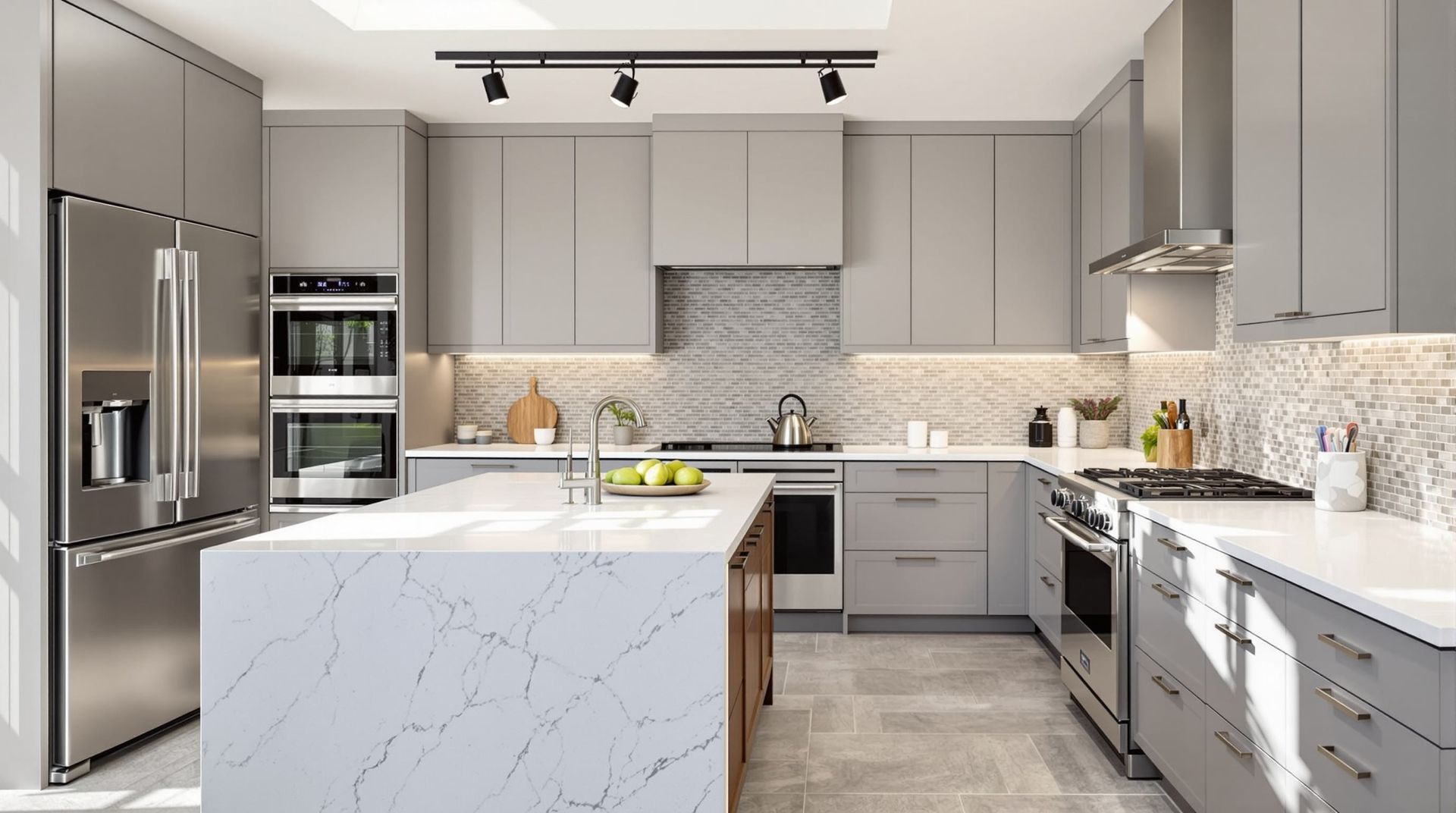
Two-tone cabinets are popular right now, and for good reason. Pairing a darker lower cabinet with a lighter upper, or mixing a painted finish with a wood tone, adds depth to a kitchen without making it feel busy. It works well in smaller spaces too, as long as the colors are chosen carefully. Our designers at Hickory Hill use 3D renderings so clients see exactly what they are getting before anything gets ordered.
Budget and timeline matter here too. Not every project calls for a fully custom build. Our kitchen cabinets range from ready-made to fully custom, so there is a realistic option for just about any scope or budget.
Cabinet Choices That Actually Change How Much Storage You Get
Not all cabinets store the same amount, even at the same price point. The type of cabinet matters just as much as the number of cabinets. These three choices have the biggest impact on how much usable storage your kitchen ends up with.
Drawer Bases vs. Door Bases
Drawer bases give you full access to everything inside, including the back. Door bases don't. A pot buried behind another pot in a lower cabinet rarely gets used. Pull-out shelves can close that gap, but drawer bases are often the cleaner solution for everyday cookware.
Upper Cabinet Height
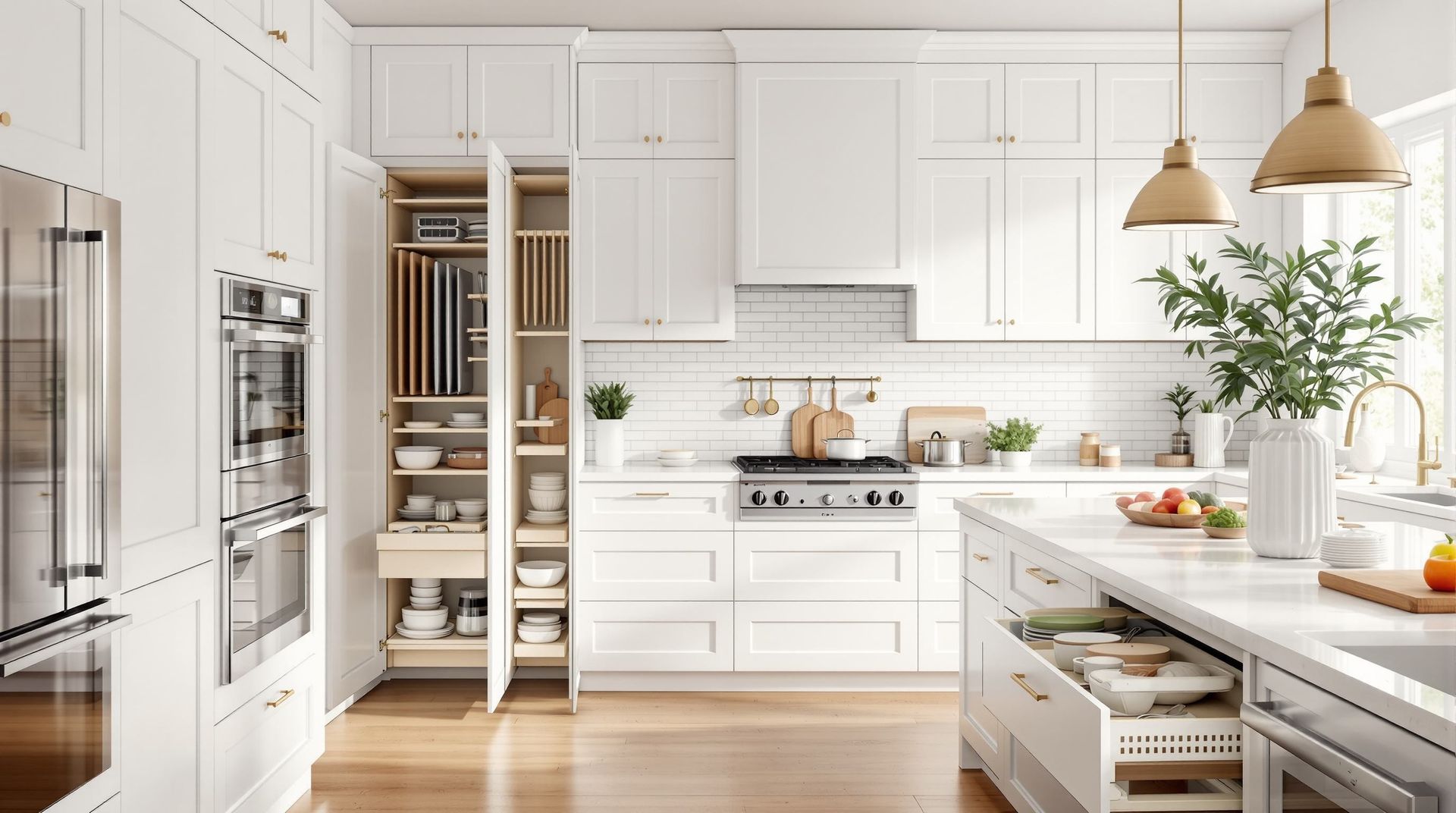
In most homes with standard 8-foot ceilings, upper cabinets stop 18 to 24 inches below the ceiling. Taking them all the way up adds a full shelf run across every wall. In a smaller kitchen, that extra height makes a noticeable difference in what you can actually store.
Pantry Cabinets and Tall Units
An 84-inch pantry cabinet holds significantly more than a standard upper and lower pair. Add interior pull-out shelves, spice racks, and door organizers and the usable volume goes up further. Our kitchen cabinets page shows several configurations worth looking at before your design consultation.
The Island Question: More Storage or Less Floor Space?
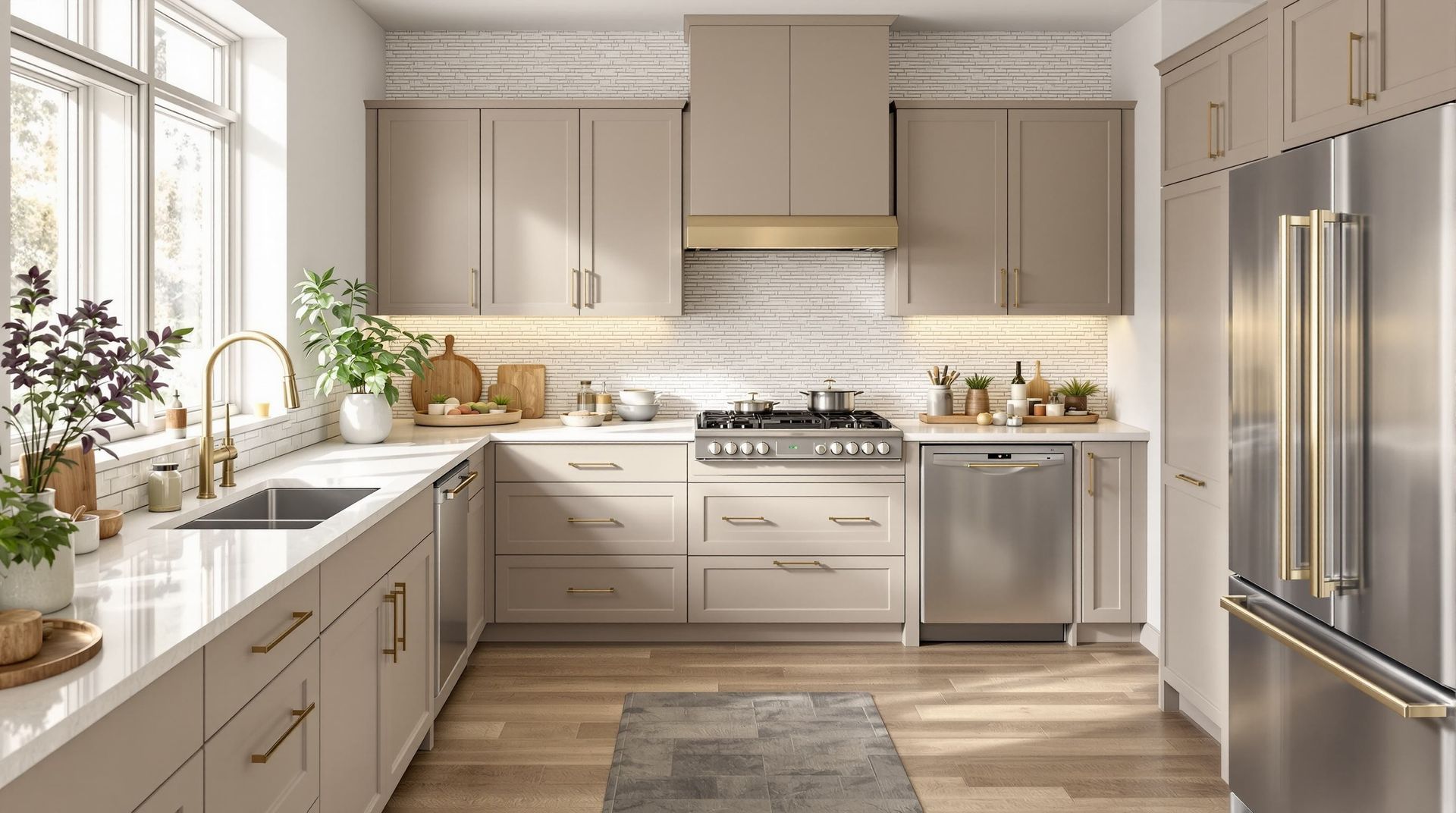
An island can add real base cabinet storage and deep drawers to a kitchen. But in smaller spaces, it can also create a traffic problem that makes the room harder to use. The standard is 42 to 48 inches of clearance on each work aisle. Less than that, and two people can't pass each other without turning sideways.
A few changes make the biggest practical difference in how a kitchen is used day to day:
Counter clutter is almost always a storage symptom. When there's no landing zone and no drawer for everyday tools, things pile up on the counter. An island with base cabinets absorbs a lot of that overflow and gets it off the work surface.
A peninsula is worth considering if floor space is tight. It connects to existing cabinetry, adds storage on both sides, and keeps a traffic lane open. This is the kind of decision where kitchen design and remodeling planning pays for itself. Seeing the layout in 3D before anything gets ordered catches problems that are expensive to fix once construction starts.
What Older Boyertown-Area Homes Make Harder (and How We Work Around It)
Older homes in this area come with construction details that make storage planning more complicated. Soffits, chimney bump-outs, and tight galley layouts are all common. Knowing what to expect before design starts saves a lot of mid-project adjustments.
Soffits are one of the most common issues. Many mid-century kitchens were built with soffits above the upper cabinets, boxing off the ceiling height you'd otherwise use for tall units. Removing them is possible but adds to the project scope. Working around them requires a different cabinet strategy entirely.
Load-bearing walls and chimney bump-outs also limit where cabinetry can run. In colonial and cape cod-style homes, these are rarely where you'd want them from a storage standpoint. Narrow galley layouts need storage built vertically rather than horizontally, which changes the cabinet selection entirely.
We take field measurements on the front end specifically so these conditions don't become surprises mid-project. Every constraint gets mapped into the design before a product gets selected. That's how we avoid the costly back-and-forth that happens when a cabinet order has to change after the walls come down.
The Part Nobody Wants to Talk About: Hidden Conditions That Change the Plan
Older kitchens hide things behind their walls. Knob-and-tube wiring and cast iron drain lines are common in homes built before 1980, and outdated plumbing stacks show up more often than most homeowners expect. These conditions don't disqualify a kitchen from a great remodel. But they do affect where certain things can go, including cabinets, islands, and pantry units.
Plumbing stack locations sometimes dictate where the sink has to stay. Moving a sink means moving the drain, which adds cost and shifts the whole storage layout. A pantry cabinet planned for one wall might conflict with an electrical panel or a gas line behind it. These aren't worst-case scenarios. They're regular findings in homes of this age.
Mold or rot behind walls is less common but it does come up. When it shows up, it gets addressed before anything else moves forward. That shifts the budget and timeline before materials have even been selected.
None of this is a reason to put off a remodel. It's a reason to work with a team that handles demolition, electrical, and plumbing in-house, with no contractor handoffs. At Hickory Hill Kitchen & Bath, every phase stays under one roof. Homeowners who've gone through a bath remodeling project with us know how much that continuity matters when unexpected conditions come up.
Conclusion
A kitchen that works well isn't just about good looks. It's about having enough room for everything your household actually uses, laid out in a way that makes daily cooking easier. Storage-first design makes that possible, but it has to be built into the plan from the beginning.
Hickory Hill Kitchen & Bath has been helping homeowners in Boyertown and the surrounding communities do exactly that since 1990. Our showroom at 220 S Reading Ave is open Tuesday through Saturday, and our designers Alexandra and Cheryl are here to help you turn a frustrating kitchen into one that finally works. Stop by or schedule a consultation to get started.