
How to Plan a Kitchen Remodel Without Costly Mistakes

Plan a Kitchen Remodel in Boyertown, PA
Quick Take: Most kitchen remodels in the Boyertown area run between $25,000 and $75,000. Start to finish, plan for 8 to 14 weeks. The jobs that go over budget almost always had one thing in common. The planning was rushed.
A lot of homes in Boyertown were built in the 1940s, 50s, and 60s. Good bones. Real character. But the kitchens? Most of them were not built for how people actually live now. Small doorways, no island space, cabinets that top out at 7 feet. It starts to wear on you.
Remodeling one of these older homes is not the same as updating a newer build. There is more to think through before you pick a single cabinet or countertop. This guide covers what we see go wrong and what actually works when you want to plan a kitchen remodel without blowing your budget or your timeline.
Start With a Real Number, Not a Wish
Here is what we hear a lot. Someone comes in with a $15,000 budget for a full kitchen overhaul. They saw a reel online and it looked doable. It is not. A proper kitchen remodel in this area, done right, starts around $25,000. Full renovations with layout changes can reach $75,000 or more.
Cabinets eat up the biggest share. Count on 30 to 40 cents of every dollar going there. It is worth spending time on that decision. The difference between stock, semi-custom, and fully custom kitchen cabinets is not just price. It is how the finished kitchen looks and holds up five years later.
Then there are the costs people forget. Light fixtures. Hardware. Tile. A new faucet because the old one looks wrong next to everything new. These are not big numbers on their own, but they pile up fast.
Before you agree to anything, get a line-by-line breakdown in writing. Not a ballpark. A real number for every piece of the project is important. That document protects you.
Older Homes Keep Secrets Inside Their Walls
This is the part nobody loves to talk about. But it is too important to skip.
What Demo Day Can Uncover
Once the walls come down, you see what was hiding behind them. Knob-and-tube wiring that has not been legal in decades. Galvanized pipes that are corroded through. Mold sitting behind old tile where a slow leak went unnoticed for years. We find at least one of these on a regular basis in homes built before 1980.
None of it stops the project. But it does change the bill and the clock.
Build a Buffer Before You Start
Set aside 10 to 15 percent of your budget before the first wall comes down. Think of it as insurance. If nothing bad turns up, great, you have money left over. If something does turn up, you are not stuck making bad choices mid-project to cover it. Permit rules also vary across Montgomery and Berks County. Check with your township before demo begins so there are no surprises on that end either.
Measure Twice Before You Order Anything
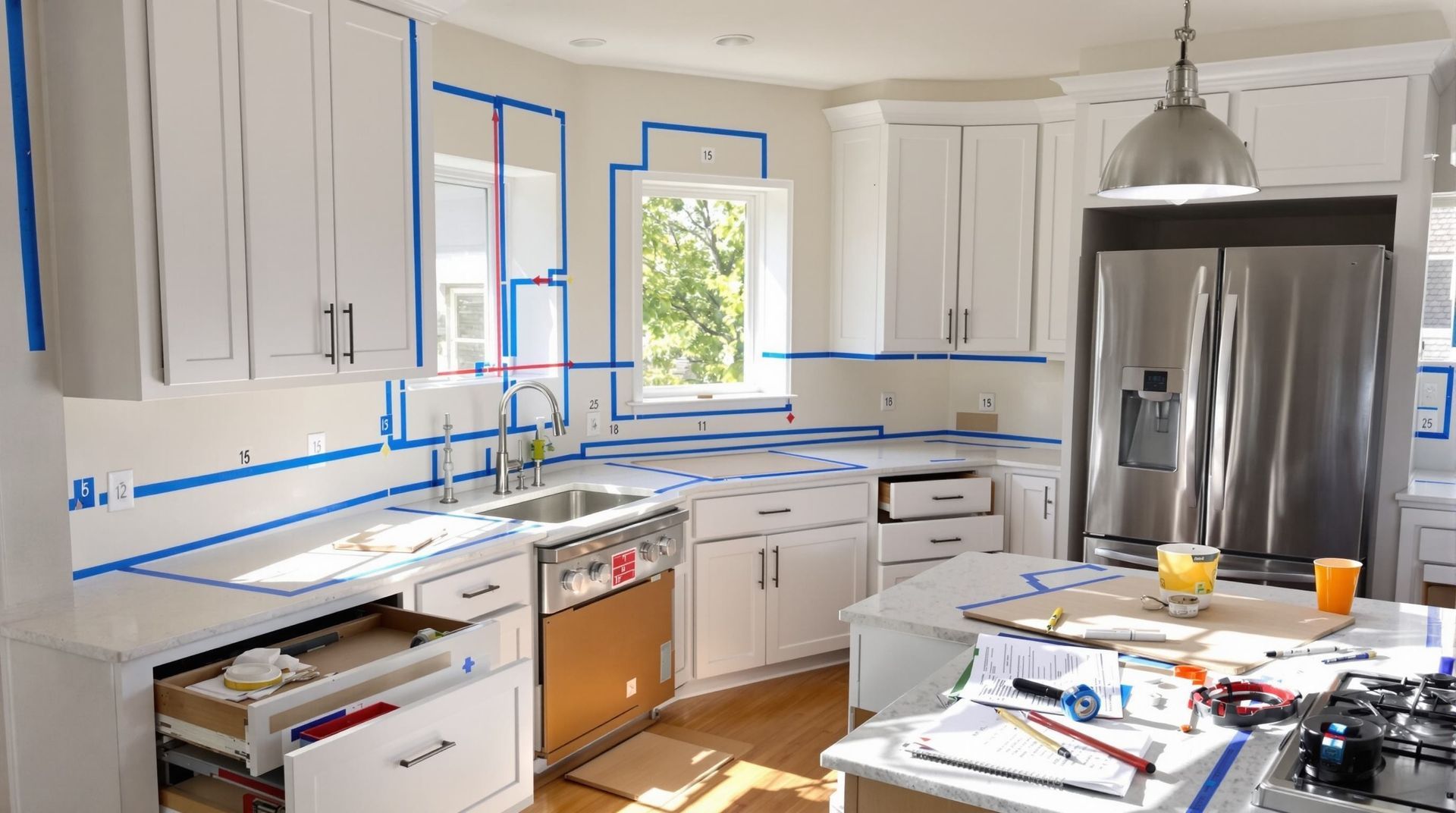
Four things cause the most problems when they get skipped:
- Work triangle balance: The path between your sink, stove, and fridge should be 4 to 9 feet on each side. Shorter than that and two people cannot use the kitchen without bumping into each other.
- Aisle clearance: You need 42 inches between facing counters at minimum. If two people cook together regularly, go to 48.
- Island sizing: An island sounds great until it blocks every path through the kitchen. Leave at least 42 inches of clearance on all sides, or do not put one in.
- Door and appliance swings: A fridge door that opens into a cabinet or a dishwasher that blocks the walkway when open. These get missed on paper all the time and are expensive to fix after the fact.
Working with a team that has a real kitchen design and remodeling process means these conflicts get caught on a screen, not after your cabinets arrive.

The Design Phase Is Where You Save Money
Most people think of design as the fun part. Picking colors, looking at countertops, flipping through cabinet samples. And it is fun. But it is also where you catch problems before they cost you anything.
Our designers Alexandra and Cheryl put together a full 3D presentation for every client. You see your exact layout, your cabinet doors, your countertop material, all of it, before a single product ships. That is not just a nice touch. It is how we catch the island that is two inches too wide or the cabinet run that blocks the window.
We go through it together in the showroom. If you want to move something or swap a finish, we change it right there. Changing a plan file costs nothing. Changing a finished kitchen costs a lot.
Once you sign off, the install crew gets that same plan. No guessing. No miscommunication. Everyone is working off the same document from day one.
Know What the Timeline Actually Looks Like
Eight to fourteen weeks is the honest range for a kitchen remodel in this area. Some jobs move faster. Some take longer. It depends on what you are doing and what shows up along the way.
Design and selection runs two to four weeks. That includes layout, product choices, and locking in your cost breakdown. After that, cabinets and countertops need to be ordered. Depending on what you pick, lead times can run four to eight weeks. That wait surprises people who expected to start construction right away.
Once construction kicks off, plan for three to five weeks of active work. Demo, electrical and plumbing rough-in, cabinet install, countertop templating, tile, and the punch list at the end.
You will not have a working kitchen for most of that. Set up a mini station in another room. A microwave, a coffee maker, a mini fridge. It is not glamorous but it makes the weeks manageable. And if your township in Montgomery or Berks County requires permits, factor in a few extra days for that scheduling too.
Hiring the Right Team Changes Everything
The cheapest bid is rarely the right one. A contractor who low-balls the quote either cuts corners on materials, cuts corners on labor, or hits you with change orders once the job is already started. None of those outcomes are good.
Questions Worth Asking Before You Commit
Find out who actually does the work. Is it their own crew or are they calling in subs you have never met? Ask to see photos of finished jobs in the area, not just a website gallery. Ask what happens if something goes wrong during construction, and get the warranty terms in writing before you sign anything.
Red Flags That Should Give You Pause
Watch out for proposals with no real detail. A contractor who asks for a large payment upfront before any work starts is another warning sign. And anyone who cannot show proof of insurance should not be working in your home, period.
Good Planning Is the Real Work
Most kitchen remodels that go badly did not fail during construction. They failed during planning. The budget was too thin. The layout was never properly measured. The wrong contractor got hired because the price looked right.
At Hickory Hill Kitchen and Bath, we have been doing this in Boyertown since 1990. Design, selection, and installation all happen under one roof, with the same team from start to finish. If you are ready to talk through what your kitchen could look like, stop by our showroom at 220 S Reading Ave. We are open Tuesday through Saturday.