
Why Professional Kitchen Design Improves Remodeling Results
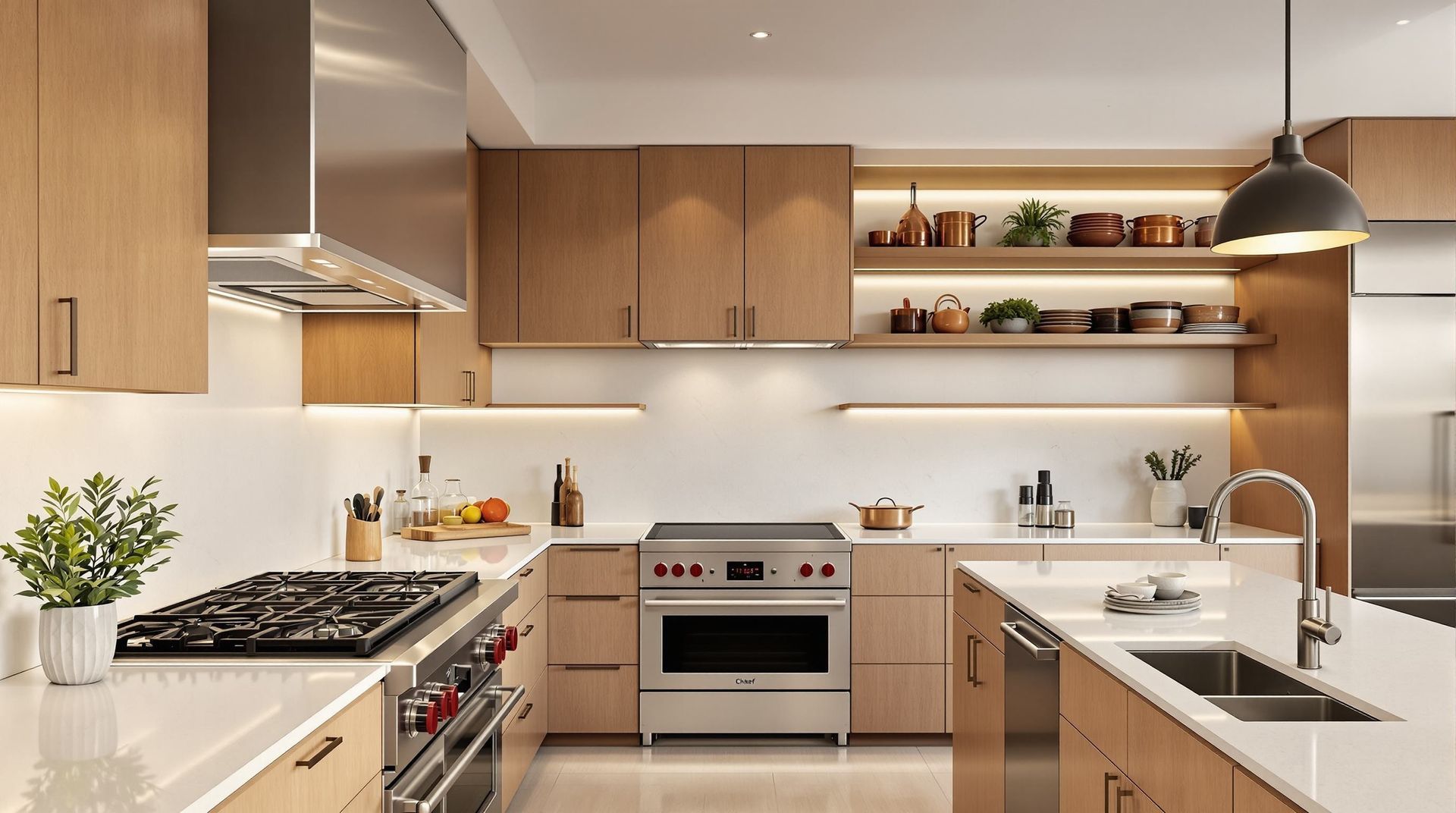
Professional Kitchen Design in Boyertown, PA
Quick Take: Professional kitchen design stops layout mistakes before they cost you money. Designers use 3D renderings so you can see your kitchen before anything gets torn out. Most Boyertown-area kitchen remodels run between $25,000 and $60,000, and a clear plan upfront is what keeps that number from growing.
You know what you want. You've got photos saved, maybe a Pinterest board, and a number in your head. What most homeowners don't have is a plan that actually fits the kitchen they're working with.
Boyertown homes are old. A lot of them were built before open-concept kitchens were even a thing. Knocking out a wall sounds simple until you find out it's load-bearing. Moving a sink sounds easy until the plumbing stack is right where you need it. Getting a designer involved early keeps those problems from becoming mid-project emergencies.
What a Kitchen Designer Actually Does
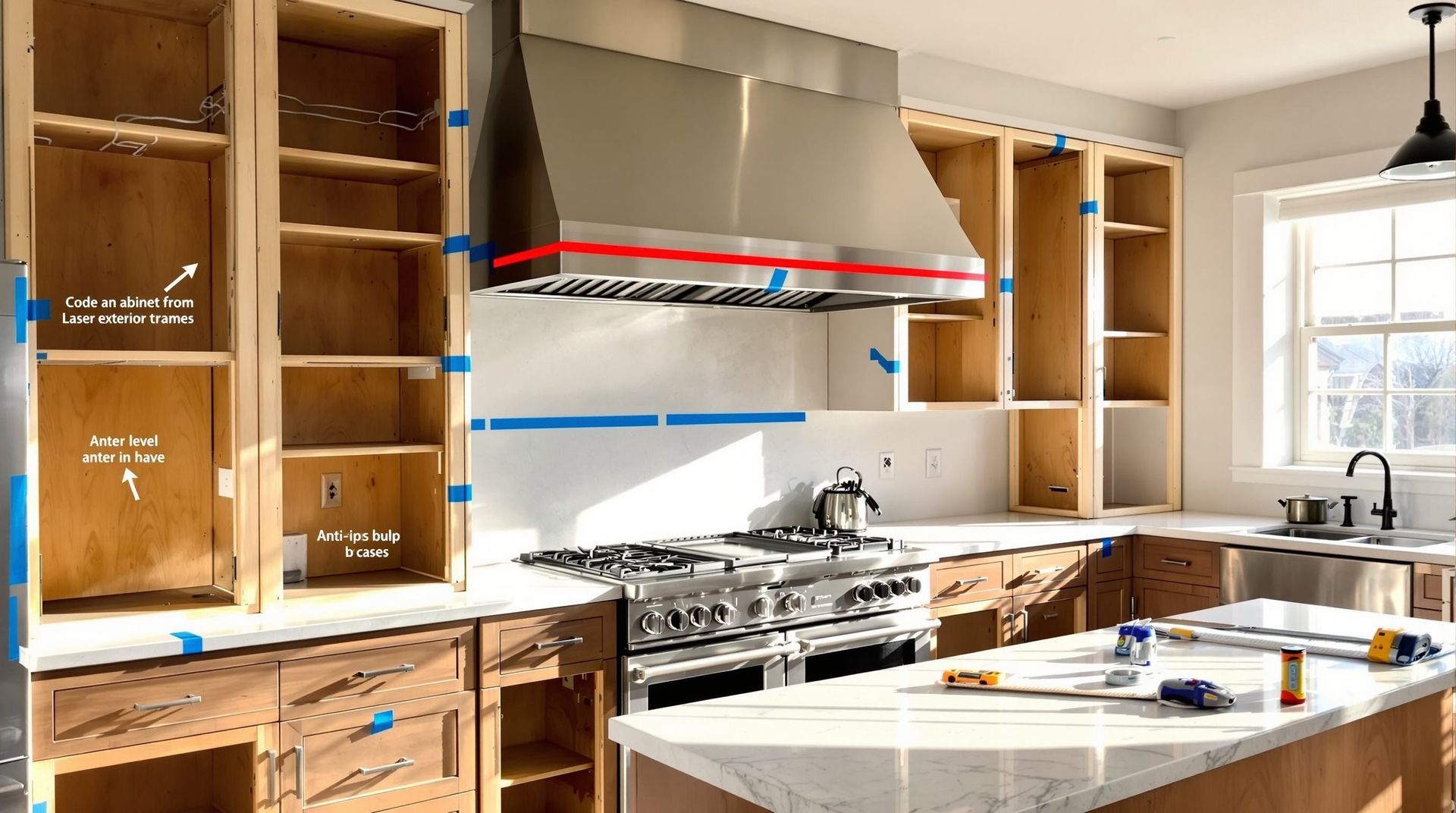
Picking finishes is maybe 20 percent of the job. Before a designer ever opens a sample book, they're out at your house with a measuring tape. Every door swing, window placement, vent location, and pipe position gets noted. That's what your floor plan gets built from.
Layout comes next. There's a standard called the work triangle, which is the distance between your sink, stove, and refrigerator. Each leg of that triangle should fall between 4 and 9 feet. Go shorter and you're bumping into whoever else is in the kitchen. Go longer and you're walking laps just to make dinner.
Once the layout is locked in, everything else gets coordinated around it. Cabinets, countertops, tile, lighting, hardware. All of it needs to work together before a single order gets placed. Our kitchen design and remodeling process includes a 3D presentation so you're looking at your actual kitchen, with your actual selections, before anything gets ordered.
How 3D Renderings Take the Guesswork Out
Most remodeling regrets come from decisions that looked fine on paper. A 3D rendering shows you the real thing. Your cabinet doors. Your countertop edge. The way the pendant lights sit over the island. You see it all before a wall comes down.
Here's what turns up in a rendering that you'd never catch from a floor plan alone:
- Cabinet door clearances: That upper cabinet next to the fridge? A rendering shows whether the door clears the handle or slams right into it.
- Appliance conflicts: Dishwasher doors are wider than people expect. You'll see exactly how much room is left when it's open.
- Traffic flow: Two people cooking at the same time is a real test. The rendering shows whether they fit.
- Lighting gaps: Under-cabinet lights don't always reach as far as you'd think. Better to catch that now than after the cabinets are installed.
- Material combinations: Seeing your cabinet color next to your countertop slab under real lighting is very different from looking at small samples.
Why Older Homes Need a Design Phase More Than New Builds
Remodeling a house built in 1955 is not the same as remodeling one built in 2005. Older Boyertown homes weren't designed for open kitchens. The walls are where they are for a reason. Sometimes that reason is structure. Sometimes it's a plumbing stack or an old electrical panel. You don't know until someone looks.
Knob-and-tube wiring, cast iron drain lines, and walls that carry the weight of the floor above, these things come up all the time in homes from the 1930s through the 1970s. None of them make a remodel impossible. But all of them change what your layout can do. A designer maps that out before you commit to a cabinet order you may have to change.
Skipping the planning step doesn't save time. It just moves the problem later, when fixing it costs more. Hickory Hill Kitchen and Bath has been working inside these older Boyertown homes since 1990. The surprises stopped being surprises a long time ago.
Material Selection Without the Overwhelm
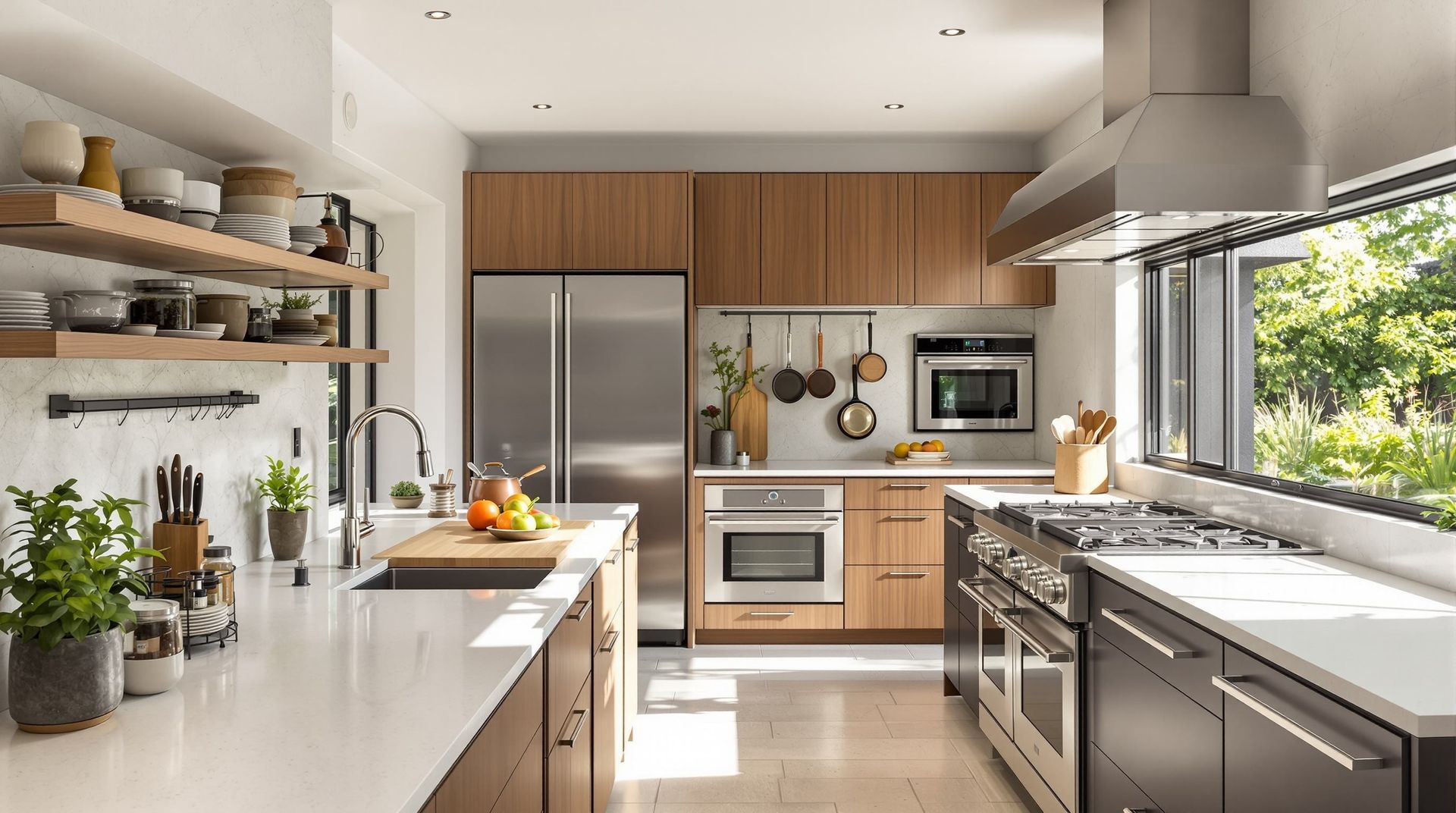
Walk into a showroom with no plan and you'll spend two hours looking at cabinet doors with no idea which ones make sense for your kitchen. A design plan changes that. It tells you which cabinet lines fit your layout, which countertop materials hold up to how you cook, and which tile sizes work with your floor plan. You're not picking from everything. You're picking from what actually works.
Choosing the Right Cabinet Line
Stock cabinets come in set sizes. Semi-custom lets you adjust dimensions. Full custom is built to fit whatever space you have. Hickory Hill carries five lines across that whole range. For most Boyertown homes, the irregular walls and off-standard ceiling heights mean stock cabinets leave gaps. Semi-custom or full custom kitchen cabinets close those gaps cleanly, without filler strips that draw your eye to what doesn't quite fit.
Countertop Pairing and the Showroom Advantage
Quartz doesn't need sealing. Granite does, usually once a year. Quartz has a more uniform look. Granite varies slab to slab, which some people love and others don't. Neither one is wrong. But you won't know which one is right for your kitchen until you see a full slab under real light, next to your actual cabinet color. Photos on a website don't get you there.
From Signed Plan to Final Installation
Approving the rendering isn't the finish line for the design process. Every product still needs to be specified. Every cost needs to be written down. Every person on the job needs to be working from the same plan. When that handoff breaks down, and it does break down when multiple contractors are involved, things get missed. One crew leaves and the next one shows up without the full picture.
Our team handles every phase in-house. Demo, electrical, plumbing, cabinets, countertops, tile. It all runs through the same crew from start to finish. Levi has run our installation team since 2009. That's a long time. Long enough to have seen just about every issue an older Boyertown home can throw at a remodel.
Before work starts, you get a written cost breakdown. Every line item is tied to your approved plan. You know what demo costs. You know what the cabinet install costs. Nothing is buried in a general labor line. If a question comes up during the build, you've got something to point to.
Questions to Ask Before You Hire a Kitchen Designer
Not every designer works the same way. Some hand off to outside contractors. Some give you a number without a breakdown. Some skip the 3D step entirely. Ask these questions before you sign anything.
- Do you produce 3D renderings before placing orders: If the answer is no, you're approving a remodel you haven't actually seen yet.
- Is your installation crew in-house or subcontracted: Outside crews can work fine, but in-house means one team is responsible for the whole job.
- What does the cost breakdown look like: You want each phase listed separately, not one total with no detail behind it.
- What happens when something unexpected turns up during demo: Every good contractor has a process for this. If they don't, that's worth knowing now.
- Do you work on bathrooms too: A lot of homeowners start with the kitchen and come back for the bath. Working with a team that handles bath remodeling projects means you're not starting over with someone new.
Where Good Kitchens Start
Kitchen remodels go wrong in the gap between what someone pictured and what actually gets built. Design is what closes that gap. At Hickory Hill Kitchen and Bath, every project starts at the planning table. That's where the layout gets tested, the materials get chosen, and the cost gets written down before any work begins.
The showroom is at 220 S Reading Ave in Boyertown. Walk-ins are welcome. If you want to sit down with a designer and talk through what your kitchen could look like, that's exactly what we're here for.