Kitchen Remodeling for Older Homes
Kitchen Remodeling for Older Homes in Boyertown, PA
Quick Take: Older homes don't remodel the same way newer ones do. In the Boyertown area, kitchens built before 1980 almost always need electrical and plumbing work done before anything cosmetic can start. Budget between $30,000 and $60,000, add a 15 to 20 percent cushion, and hire a team that handles every trade themselves.
Drive through Boyertown, Pottstown, or Collegeville and you'll pass block after block of Colonials, Cape Cods, and Craftsman-style houses. Most of them were built between the 1930s and 1970s. They're solid homes with real character. Their kitchens, though? That's a different story.
Cramped layouts, not enough counter space, cabinets that don't quite hold what they should. These are things homeowners put up with for years, sometimes decades, before finally deciding to do something about it. Remodeling an older kitchen isn't like swapping out cabinets in a newer build. There's more going on inside the walls, and figuring that out early is what keeps a project on track.
Why Older Kitchen Layouts Stop Working
Kitchens from the 1950s, 60s, and 70s weren't built for the way people cook today. Back then, one person handled the kitchen. Counter space was minimal. Storage was a row of upper cabinets you needed a step stool to reach. That worked for a different era. It doesn't work now.
Most of these kitchens are boxed in. Walls on every side, no connection to the dining room or living area. Two people can't move around each other comfortably. There's no room for kids to sit while dinner gets made, no place for a guest to stand without being in the way.
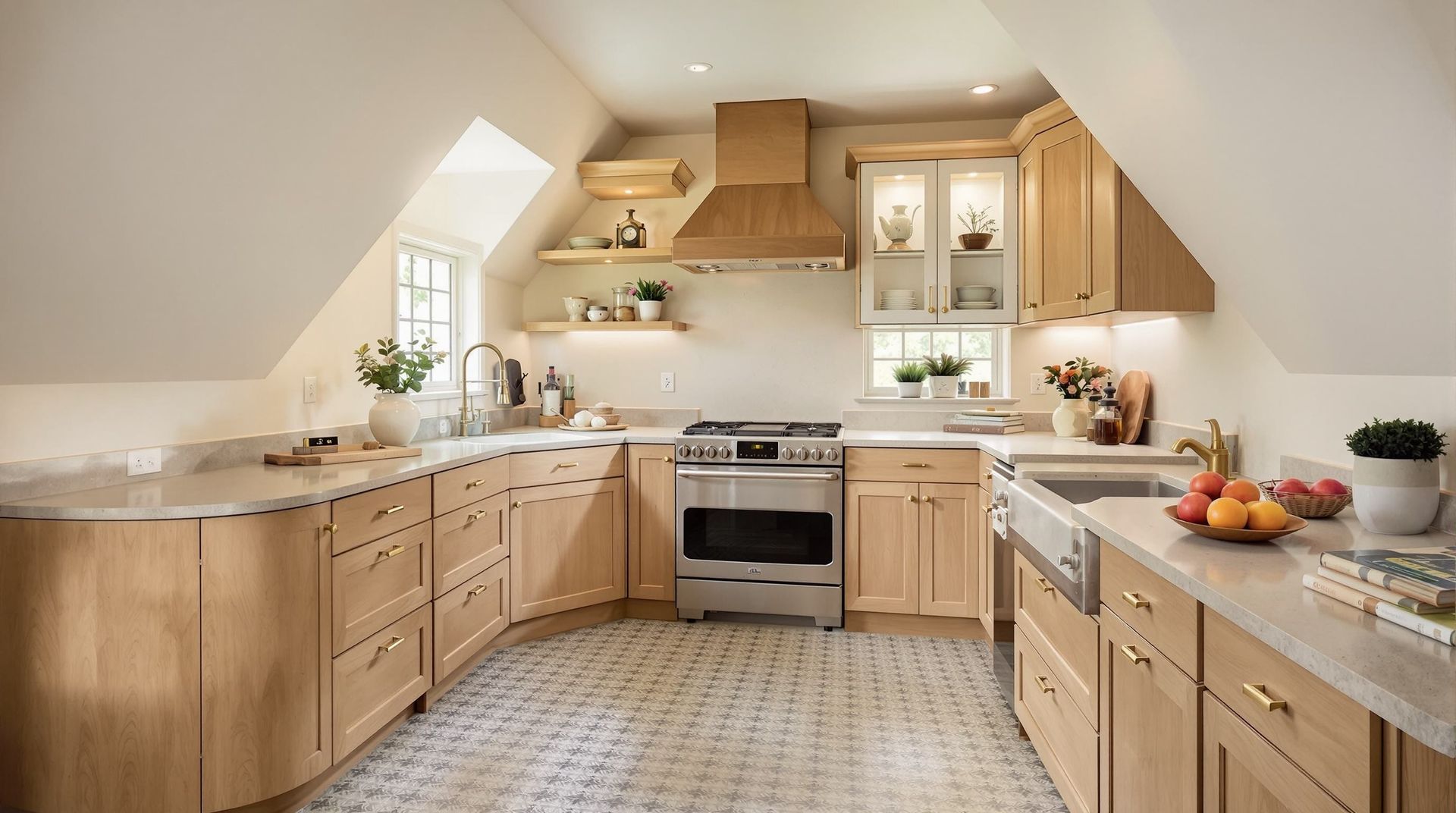
A kitchen that actually works needs 42 to 48 inches of clear space between counter runs. The path from sink to stove to refrigerator should be short and unobstructed. Most older Boyertown-area kitchens don't come close. That's why solid kitchen design and remodeling always starts with the layout, not the countertops.
What's Usually Hiding Behind the Walls
Pull off the drywall in a home built before 1970, and you never quite know what you'll find. Knob-and-tube wiring is common. So are galvanized steel pipes that have been slowly corroding for decades. Neither one is safe to leave in place once you're opening up a kitchen for a full remodel.
Mold shows up too, especially along exterior walls or under the sink. It's not a dealbreaker. But it does need to be handled before new materials go in. Hiring a team that manages electrical, plumbing, and construction themselves means that when something turns up, work doesn't stop for days while you track down a separate contractor.
Load-bearing walls are another thing that comes up when homeowners want to open the space. Not every wall can come down. Finding that out during the design phase is far less disruptive than finding it out after demolition has started.
Preserving the Character While Modernizing the Function
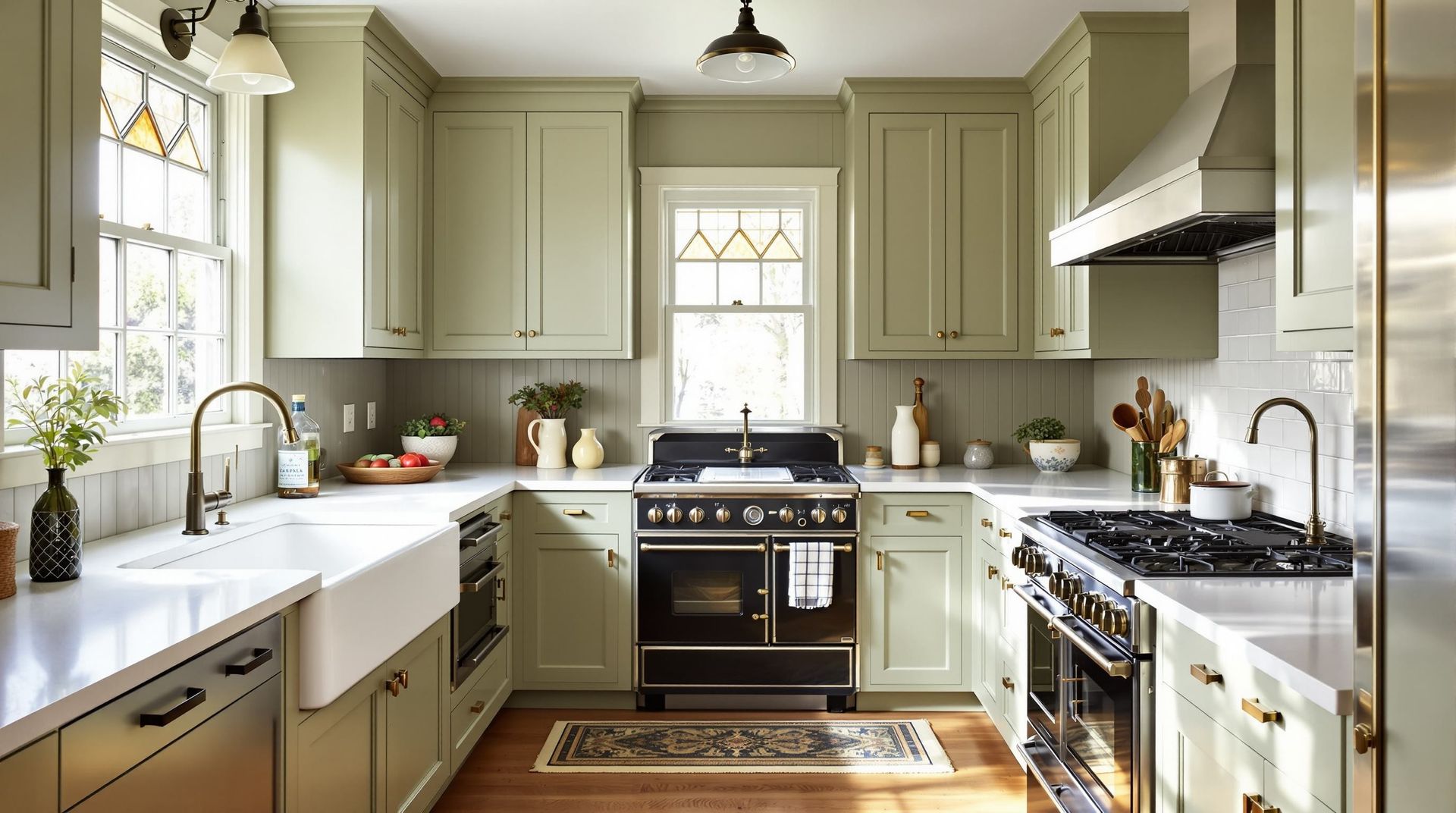
A lot of homeowners are nervous about this part. They love their old house. They don't want a new kitchen that looks like it belongs in a subdivision built last year. That's a fair concern, and it's one that good design takes seriously.
Shaker and inset cabinet doors work well in older homes because they're simple. They don't fight the architecture. Hardware in brushed nickel or matte black keeps things current without feeling trendy. For countertops, natural granite, solid wood, and Corian all hold up in a busy kitchen and suit a more traditional look. Our kitchen cabinetry options run from ready-made to fully custom, so there's something for every budget and every home.
Tile is where older homes really shine. Subway tile, hex mosaic floors, beveled profiles. These choices feel at home in a Colonial or Cape Cod without looking like a renovation from 1987. Walking through a showroom and seeing how the materials actually look together makes this process a lot less stressful than trying to piece it together from a website.
Electrical and Plumbing Upgrades: What's Required and Why
This is the part people sometimes push back on. It feels like extra cost for things they can't see. But code requirements in Pennsylvania aren't negotiable, and older kitchens rarely meet them without upgrades.
Here's what a modern kitchen needs on the electrical side:
- Refrigerators require a dedicated 20-amp circuit: Sharing a circuit with other appliances is a code violation in most townships.
- Dishwashers and microwaves each need their own line: Running them off shared circuits is a common issue in older kitchens and a frequent source of tripped breakers.
- GFCI outlets are required near all water sources: These protect against electrical shock in wet areas and are a standard code requirement.
Plumbing is similar. Galvanized steel pipes corrode from the inside out. Water pressure drops. Eventually they fail. Replacing them with copper or PEX is standard practice in an older home remodel. Permit requirements vary across townships in Montgomery and Berks County, and that's something Hickory Hill navigates on every project so homeowners don't have to figure it out themselves.
How to Budget for a Kitchen Remodel in an Older Home
Here's the honest version: older homes cost more to remodel. Not because of the cabinets or countertops, but because of everything that has to happen before those things go in. Electrical panels, plumbing lines, structural surprises. These are the costs that catch people off guard when they haven't planned for them.
Most mid-range kitchen projects in the Boyertown area run between $30,000 and $60,000. Homes needing significant electrical or plumbing work tend to land at the higher end. Custom cabinetry and stone countertops push it further. An itemized cost breakdown before any work begins takes a lot of the anxiety out of that number.
Set aside 15 to 20 percent on top of your budget. In older homes, something almost always turns up once demolition starts. An outdated panel, a section of pipe that needs to come out, a wall that wasn't what it looked like. That cushion keeps the project moving when it does.
What the Remodeling Process Looks Like from Start to Finish
Older home remodels have more steps than people usually expect. That's not a complaint. It's just the nature of working with a house that has history. Having a team that's done this many times before makes a real difference in how smoothly it goes.
We start with field measurements and a sit-down consultation. From there, clients come into the showroom to look at cabinet lines, countertop samples, and tile options in person. Alexandra and Cheryl put together a full 3D design presentation, so the kitchen is fully mapped out before anything gets ordered. A detailed cost estimate comes next, and we go through it together line by line.
Once construction starts, our crew handles everything. Demolition, electrical, plumbing, cabinetry, countertops, tile. Levi has led the installation team since 2009, and that kind of consistency matters on a project where decisions have to get made quickly. If you're also thinking about the bathroom, our bath remodeling team works the same way. Same crew, same process, no handoff gaps.
Conclusion
Older homes ask more of a remodeling team. The work goes deeper, the planning takes longer, and things come up that wouldn't in a newer build. That's not a reason to put it off. It's a reason to be choosy about who you hire.
At Hickory Hill Kitchen and Bath, we've been working on homes like yours since 1990. We know what's inside the walls of a 1950s Colonial. We know the permit process in Montgomery and Berks County. And we know how to turn a kitchen that hasn't worked in years into one that does. Stop by our showroom at 220 S Reading Ave in Boyertown. Alexandra and Cheryl are here to help you figure out where to start.